In the crushing darkness of the ocean’s abyss, where pressures soar to 2,000 atmospheres and temperatures flirt with freezing, life not only persists but thrives. Scientists have now uncovered one of its best-kept secrets: a class of deep-sea enzymes that perform catalytic miracles under conditions that would obliterate most terrestrial proteins. Dubbed "high-pressure enzyme magicians," these molecular marvels are rewriting the rules of biochemistry.
The discovery emerged from a decade-long hunt for extremophiles—organisms that survive in Earth’s most hostile environments. A joint team from the Scripps Institution of Oceanography and the Japan Agency for Marine-Earth Science and Technology (JAMSTEC) isolated these enzymes from microbial communities clinging to hydrothermal vents in the Mariana Trench. What sets them apart is their ability to accelerate chemical reactions at pressures equivalent to two kilometers of water bearing down on every square centimeter—a feat comparable to "a ballet dancer pirouetting flawlessly inside a collapsing mine shaft," as one researcher poetically described it.
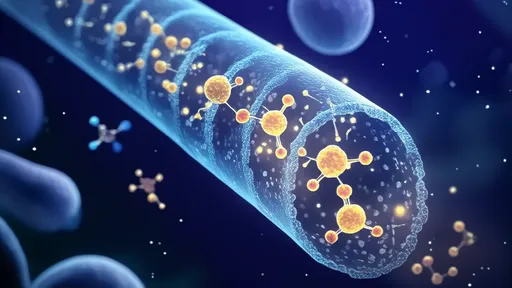
Structural sorcery lies at the heart of these enzymes’ prowess. Where conventional proteins would unravel under such extremes, deep-sea variants exhibit a unique architectural resilience. Their active sites—the catalytic pockets where reactions occur—are shielded by a fortress of compact, pressure-resistant amino acid arrangements. Cryo-electron microscopy revealed an intricate lattice of strengthened hydrogen bonds and hydrophobic cores that behave like molecular shock absorbers. This allows the enzymes to maintain flexibility for substrate binding while resisting the distorting forces of their environment.
Perhaps most astonishing is their evolutionary ingenuity in substrate recruitment. At crushing depths, the random collision of molecules slows dramatically. Yet these enzymes have developed specialized electrostatic "funnels" that actively draw substrates toward their active sites—a mechanism utterly absent in shallow-water counterparts. "It’s as if they’ve invented a completely new form of catalysis," remarked Dr. Elena Vostrikova, a biophysicist unaffiliated with the study. "They don’t just tolerate high pressure; they’ve weaponized it to enhance reaction efficiency."
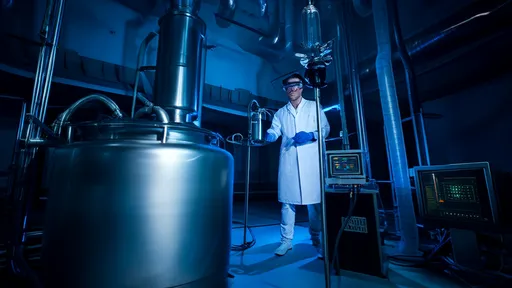
The industrial implications are staggering. Pharmaceutical companies are racing to adapt these enzymes for high-pressure synthesis of chiral drugs, where traditional methods struggle with stereochemical precision. Petrochemical engineers envision bioreactors that operate at unprecedented pressures to crack heavy crude oils. Even the food industry sees potential—these enzymes could revolutionize protein extraction from alternative sources like algae or insect biomass under energy-efficient, high-pressure processing.
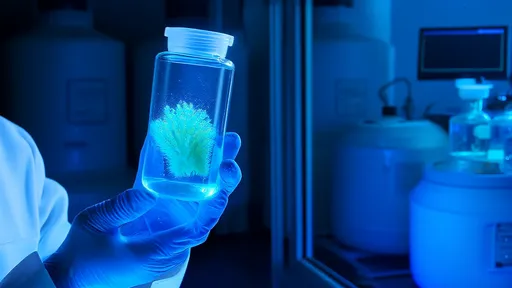
Yet mysteries linger. How do these enzymes achieve such exquisite pressure sensitivity without sacrificing catalytic speed? Preliminary evidence suggests a dynamic interplay between solvent molecules and the enzyme’s surface—a phenomenon still poorly understood. The research team has deployed autonomous deep-sea labs to monitor enzyme behavior in situ, hoping to catch these molecular magicians mid-performance under their natural conditions.
As climate change pushes marine ecosystems toward new extremes, understanding these biochemical adaptations grows ever more urgent. These enzymes don’t merely represent a scientific curiosity; they’re a masterclass in molecular resilience that could inspire everything from new materials to space-age biotechnologies. The deep ocean, it seems, still holds spells we’ve only begun to decipher.

By /Aug 18, 2025

By /Aug 18, 2025

By /Aug 18, 2025

By /Aug 18, 2025
By /Aug 18, 2025
By /Aug 18, 2025
By /Aug 18, 2025

By /Aug 18, 2025
By /Aug 18, 2025
By /Aug 18, 2025

By /Aug 18, 2025

By /Aug 18, 2025
By /Aug 18, 2025
By /Aug 18, 2025
By /Aug 18, 2025

By /Aug 18, 2025
By /Aug 18, 2025
By /Aug 18, 2025
By /Aug 18, 2025
By /Aug 18, 2025
