The growing crisis of antibiotic resistance has long been a subject of scientific concern, but a group of researchers and artists have found an unconventional way to bring this invisible threat into sharp focus. By merging microbiology with visual art, they’ve created a striking series of experiments that transform bacterial colonies into vivid, thought-provoking displays. This fusion of science and creativity, dubbed "microbial art warfare," not only captures attention but also serves as a powerful tool for public education.
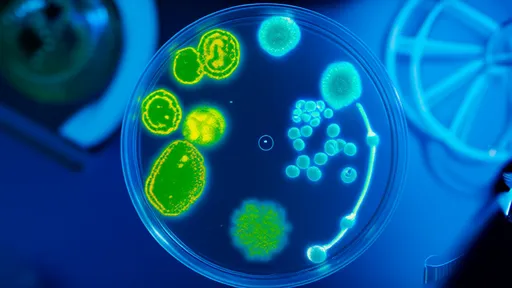
At the heart of this project lies a simple yet profound concept: using agar plates as canvases and antibiotic-resistant bacteria as the medium. Scientists paint intricate patterns or messages with different bacterial strains, then expose them to varying concentrations of antibiotics. Over time, the surviving colonies grow in visually dramatic ways, revealing which strains withstand treatment. The results are hauntingly beautiful—swirls of vibrant colors punctuated by zones of death where antibiotics succeeded, and resilient patches where they failed.
The process begins with careful selection of bacterial strains, often including notorious pathogens like MRSA (methicillin-resistant Staphylococcus aureus) or multidrug-resistant E. coli. These microbes are cultured in gradients of antibiotics, creating a battlefield where only the strongest survive. What emerges are living maps of resistance—some resembling abstract expressionist paintings, others forming clear geometric patterns that starkly illustrate the selective pressure of drugs.
One particularly striking piece shows a circular agar plate divided like a pie chart. Each section contains bacteria exposed to a different antibiotic. After incubation, some slices show robust growth, others mere wisps of surviving colonies, and a few remain entirely barren. The visual metaphor is unmistakable: our arsenal of drugs is becoming uneven, with some weapons losing their power entirely while others cling to partial effectiveness.
Beyond their aesthetic impact, these microbial artworks carry deep scientific significance. They provide immediate, intuitive understanding of resistance patterns that might otherwise require complex data analysis to comprehend. A single plate can show how resistance to one antibiotic often correlates with resistance to others, or how certain mutant strains dominate under specific conditions. The colors—natural pigments produced by the bacteria or added fluorescent markers—create an emotional resonance that spreadsheets cannot match.
The artistic approach also highlights the evolutionary arms race between humans and microbes. Time-lapse videos of these plates show waves of bacterial growth retreating and advancing as antibiotics diffuse through the agar. In some cases, mutant colonies suddenly erupt at the edge of the antibiotic zone, demonstrating spontaneous resistance development. These dynamic processes, normally invisible to the naked eye, become visceral when captured artistically.
Public engagement has been a central goal of the project. Exhibitions in science museums and galleries have drawn unexpected crowds, with viewers spending far more time contemplating these living artworks than traditional informational displays about antibiotic resistance. The visceral impact of seeing deadly pathogens arranged in beautiful, intricate patterns creates cognitive dissonance that sparks curiosity and conversation. Many visitors report that the experience changed their understanding of microbial threats more profoundly than any statistics or warnings could.
Educational institutions have begun adopting these techniques for classroom demonstrations. Students design their own resistance patterns, gaining hands-on experience with microbiological techniques while witnessing evolution in real time. The approach has proven particularly effective for visual learners and those who might otherwise find microbiology intimidating. There’s something uniquely compelling about watching your own bacterial "painting" transform over days, with the success or failure of each stroke determined by invisible biochemical warfare.
The project hasn’t been without controversy. Some critics question whether aestheticizing dangerous pathogens could trivialize their threat, or whether public displays might inspire irresponsible experimentation. Proponents counter that the dramatic visuals actually enhance understanding of biosafety protocols—the striking images of resistant superbugs reinforce why such organisms require careful handling. All exhibitions use non-pathogenic or properly contained strains when possible, with strict safety measures always in place.
Looking ahead, researchers see potential for this method to track resistance trends geographically. By creating standardized microbial art "challenges" using local bacterial isolates from different regions, scientists could build visual maps of resistance patterns across continents. The approach might also help monitor the effectiveness of new antibiotics or alternative treatments like phage therapy. Already, some hospitals are exploring the use of such visual assays for quick, intuitive antibiotic susceptibility testing at the bedside.
Perhaps most importantly, this unconventional approach bridges the gap between scientific urgency and public awareness. As antibiotic resistance continues to escalate—with predictions of 10 million annual deaths by 2050 if trends continue—finding new ways to communicate the crisis becomes vital. Microbial art won’t solve the problem alone, but by making resistance visible, tangible, and strangely beautiful, it may help mobilize the attention and resources needed to confront this slow-moving pandemic.
The intersection of art and science has often produced breakthroughs in understanding, from Leonardo’s anatomical sketches to modern data visualization. In the case of antibiotic resistance, where the adversary is microscopic but the stakes couldn’t be larger, this creative approach offers both a warning and a challenge. The vibrant, deadly patterns growing on these agar plates are more than art—they’re portraits of an evolutionary struggle we cannot afford to lose.

By /Aug 18, 2025

By /Aug 18, 2025
By /Aug 18, 2025
By /Aug 18, 2025
By /Aug 18, 2025
By /Aug 18, 2025
By /Aug 18, 2025

By /Aug 18, 2025

By /Aug 18, 2025
By /Aug 18, 2025

By /Aug 18, 2025

By /Aug 18, 2025

By /Aug 18, 2025

By /Aug 18, 2025
By /Aug 18, 2025
By /Aug 18, 2025

By /Aug 18, 2025
By /Aug 18, 2025
By /Aug 18, 2025
By /Aug 18, 2025
